
This Week’s E-Bike News Headlines
Estonian E-Bike Company Ampler Has Filed for Bankruptcy

Image Source: Ampler
Ampler built a reputation around doing things differently. At a time when most e-bikes were bulky, battery-forward machines, Ampler went the other direction, designing lightweight bikes with small rear-hub motors, torque sensors, and fully hidden or integrated batteries. The result was e-bikes that looked almost indistinguishable from regular bikes. We even covered the brand years ago when it became one of the first to offer USB-C charging on an e-bike.
More recent models pushed the integration further, with displays built into the top tube and GPS tracking built in. Stylistically, the brand stayed ahead of many competitors. But Ampler was always a small, direct-to-consumer operation, and small DTC brands have less margin to absorb bad conditions. European e-bike sales have slowed, competition has grown, pricing pressure has increased, and a long-term lease on the company’s Berlin flagship store may have added to the strain.
Ampler says it’s working with an insolvency administrator to explore options through third-party companies. A sale is possible. VanMoof and Cowboy both went through similar situations, and both eventually found buyers. Whether Ampler lands in the same position remains to be seen.
The trickier issue for existing customers is warranty and service. Ampler’s motors and other key components are proprietary, so if the brand disappears entirely, finding repair support could be genuinely difficult.
Our Take:
Ampler was doing interesting things, and there’s something worth noting about a small brand that competed on design and engineering rather than just price. But DTC e-bike brands have shown repeatedly that being good isn’t enough on its own. You need volume, and you need staying power. The warranty situation is the part we’re most concerned about for current owners. Proprietary components with no clear service path is a real problem, and it’s a reminder of why repairability and parts availability matter when buying any e-bike.
Bike Conglomerate United Wheels to Close Buzz and Pause Niner Brands

Image Source: Buzzbicycles
United Wheels, which also owns Huffy and Batch, is closing Buzz and pausing operations at Niner. The decisions reflect a broader effort to streamline the company’s portfolio, reduce inventory overlap, and focus on brands with the clearest growth opportunities.
Buzz is being closed because of how much its product line overlapped with Huffy and Batch. Some Buzz models will transfer over to those brands. Huffy, which was U.S.-only for 130 years until 2022, now has United Wheels’ attention for international expansion, with Europe, Latin America, and China identified as target markets. Batch has similar growth opportunities.
Niner is a different story. The brand isn’t being closed outright, but marketing and product development have been paused. United Wheels CEO Bruno Maier described it as a rethink rather than a shutdown, saying, “We are looking at it as a product line for the future. Right now we want to rethink how we take that brand to market because there’s still a great following for it.” The Fort Collins, Colorado location will close as part of the pause, and four employees have been laid off, with others being reassigned. Niner will continue honoring warranties and providing customer and dealer support during the pause.
The e-mountain bike market’s growth is the main factor. Niner had excess inventory it couldn’t move fast enough, and the shift toward e-MTBs made its position harder to sustain.
Our Take:
The Buzz closure makes straightforward business sense. If you have a brand that overlaps heavily with two others you own, cutting it is an obvious call. The Niner pause is harder to read. The brand has a genuine following, and calling it a “rethink” rather than a shutdown at least suggests there’s intent to bring it back in some form. But “pause” can also be a comfortable word for something that ends up being permanent. The e-MTB market is where growth is, and if Niner couldn’t position itself there effectively, that’s a structural problem, not just a timing one.
Lycra Company Restructures Following Chapter 11 Bankruptcy
Image Source: Google
The Lycra Company has emerged from Chapter 11 bankruptcy with new owners and a significantly reduced debt load. The restructuring process began in March when the company declared bankruptcy. Through that process, it worked with creditors to cut more than $1.2 billion in debt and secured over $75 million in new investment from global investment funds.
For those who need a refresher: Lycra makes elastane, the stretchy fiber used in cycling apparel (road riders are well acquainted). The company’s executive team largely remains in place, though former CEO Gary Smith stepped down during the restructuring. CFO Dean Williams has been named interim CEO, and the company has a new board of directors.
Williams made a statement about the company’s path forward, saying, “Emergence marks a defining moment for The LYCRA Company. We will now be a financially stronger, more focused organization that is positioned for growth.” The company pointed to its ability to maintain production and keep working relationships with employees, customers, and vendors intact throughout the process.
Our Take:
This one is a bit removed from e-bikes directly, but Lycra’s materials show up in cycling apparel across the board. The restructuring looks like a relatively clean outcome. The debt reduction is substantial, the operations stayed running, and the team is mostly the same. Emerging from Chapter 11 with over $75 million in new investment and intact supplier relationships is better than the alternative. We’ll see what “positioned for growth” actually looks like in practice.
Portland’s Firsthand Framebuilding Acquires Paragon Machine Works
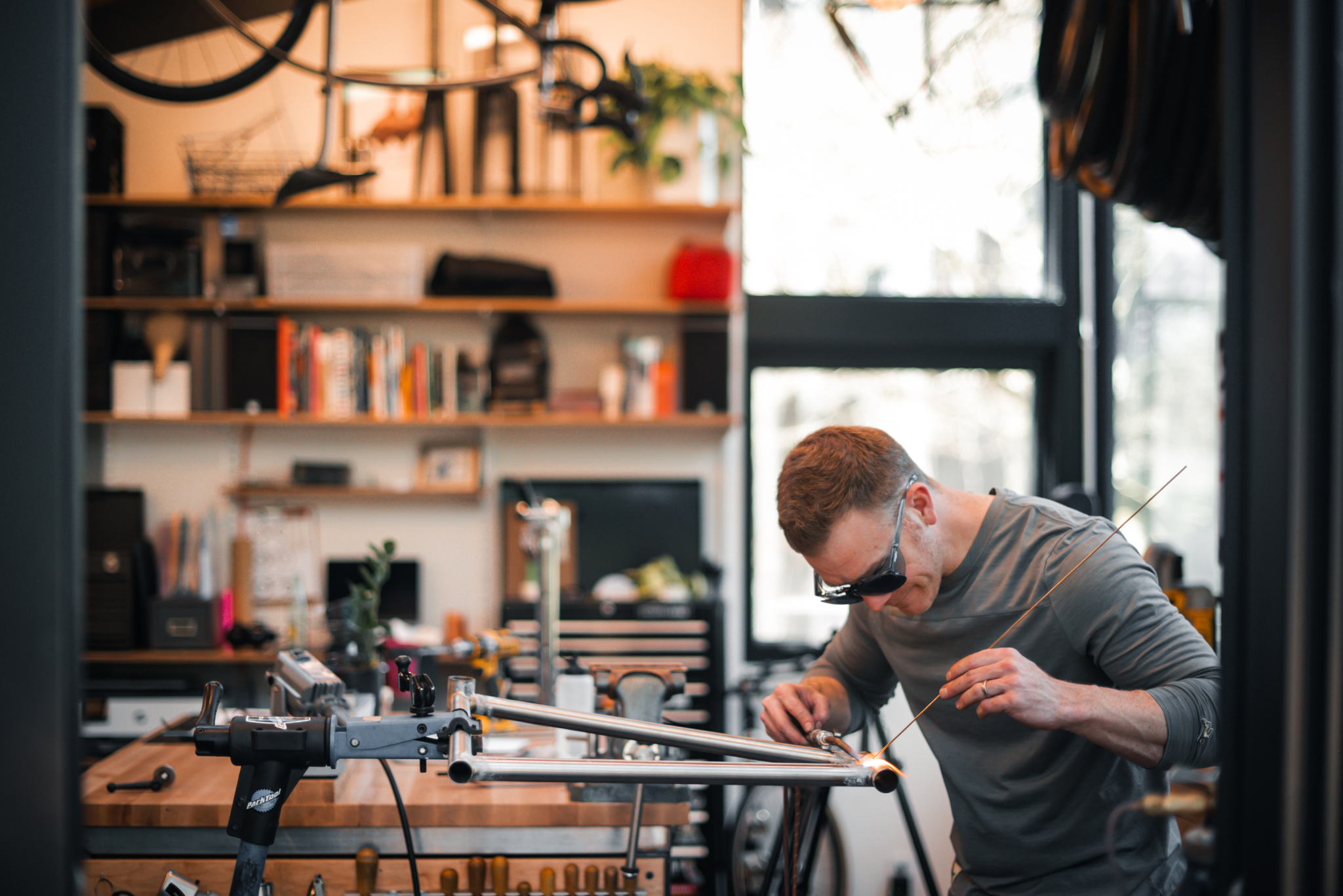
Image Source: Firsthand Framebuildling
We covered Paragon’s closure back in March, when the 43-year-old framebuilding components company announced it was shutting down. This week brought a better follow-up than most expected: Firsthand Framebuilding, a Portland-based retailer of bike frame materials and supplies, has purchased all of Paragon’s assets. That includes the Paragon brand, its designs and trademarks, its tooling, and its remaining inventory.
Firsthand has already begun selling Paragon’s inventory through its website. Longer term, owner Chris Blandford plans to start manufacturing select Paragon parts in-house after acquiring or relocating the necessary machinery. He’s also planning to work with local partners in the near term to produce some of the catalog. He was upfront that some of Paragon’s less popular parts won’t be carried forward, and Firsthand won’t take on custom work the way Paragon did.
Paragon’s former owners released a statement about the acquisition, saying, “We’re proud of the legacy we’ve created at Paragon Machine Works. Transitions are never easy, but working with Firsthand to secure Paragon’s future has been a dream come true. To see the product line not only carried on, but by a company that is truly investing in the future of framebuilding is more than we could have hoped for.”
Blandford said Firsthand will reach out to Paragon’s previous customers in the near future with updates on plans and product availability.
Our Take:
This is the kind of outcome you hope for when a well-regarded brand closes. Paragon’s parts have been staples for framebuilders for decades, and having someone step in who already operates in that space and has real intentions to keep manufacturing domestically is genuinely good news. Blandford has been clear-eyed about what he will and won’t take on, which is a better sign than vague promises. The fact that Firsthand was already planning frame component production in-house before this acquisition means Paragon’s catalog fits into something that was already in motion.
